
How EchoDepth Works
44 Action Units. FACS standard. Communication depth model. Six steps from input to Decision Intelligence.
Input
EchoDepth receives video input — live feed, recorded session, or uploaded content — from the deployment environment.
Action Unit Detection
EchoDepth detects and classifies 44 facial Action Units in real time using FACS-standard computer vision models.
Cultural Calibration
AU patterns are calibrated against the relevant cultural cohort from EchoDepth's 14-cohort reference set across 6 countries.
Communication Depth Mapping
Calibrated AU patterns are mapped across multiple delivery dimensions, producing a multi-dimensional communication quality output.
Signal Generation
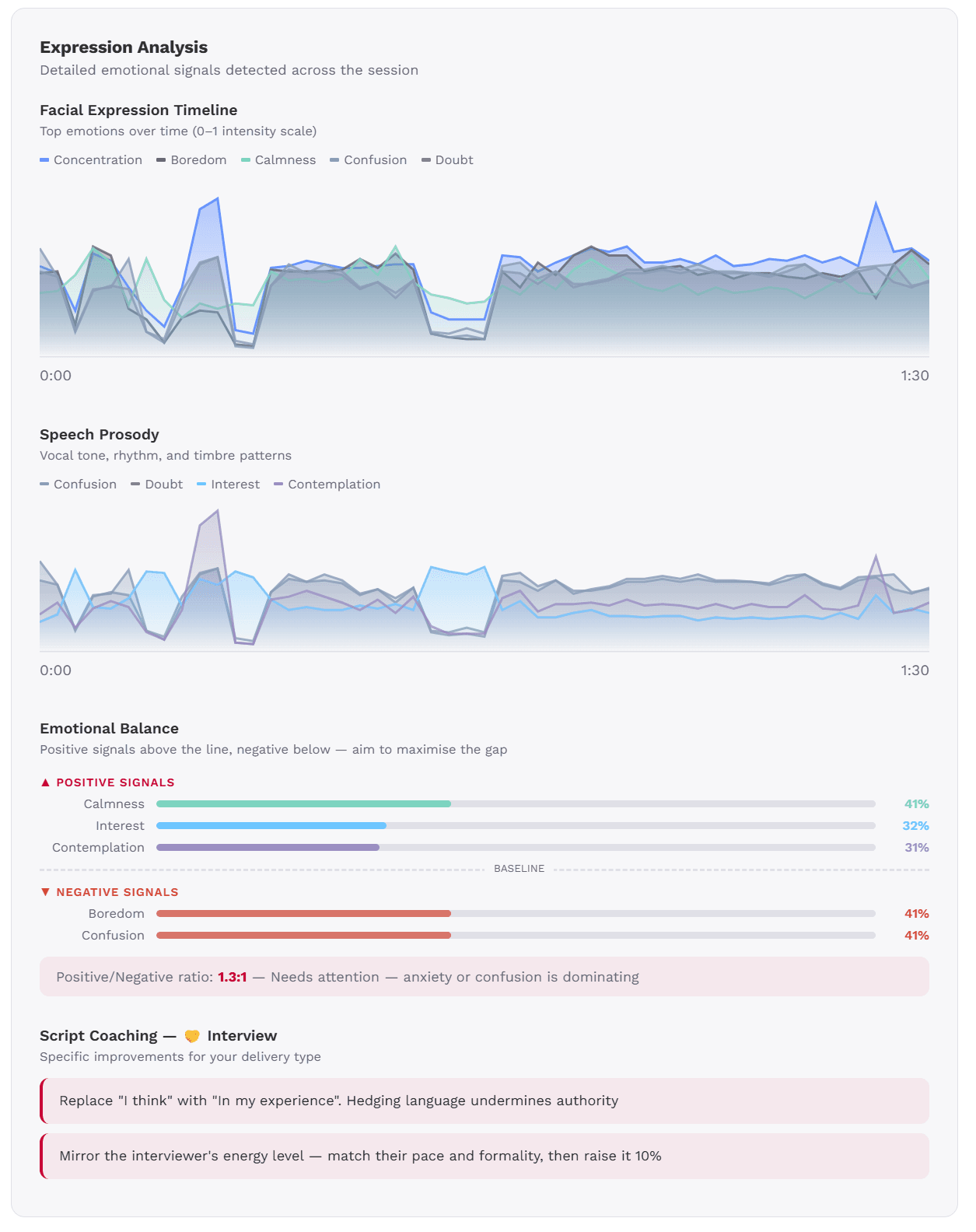
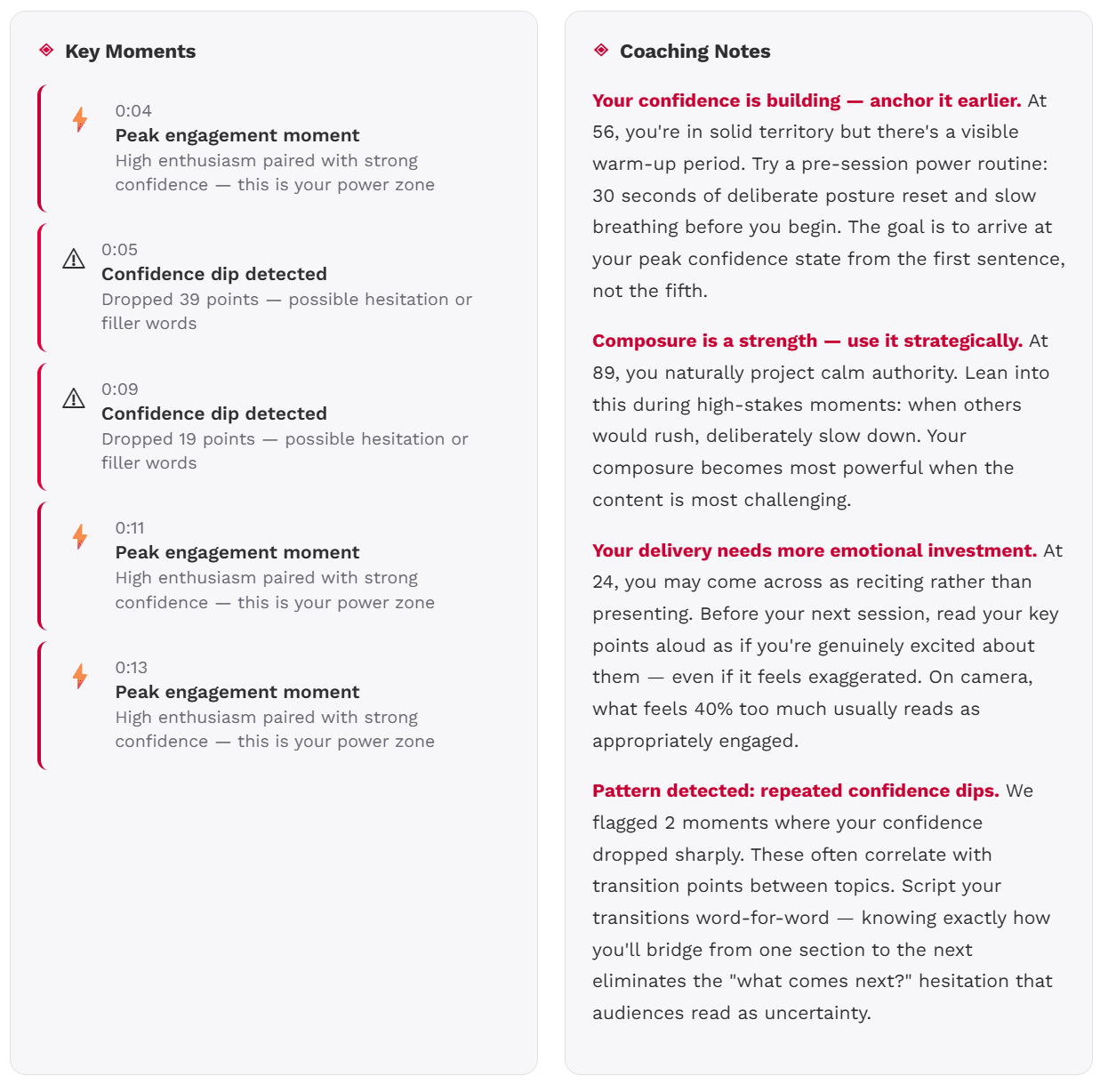
Emotional state data is processed into decision-relevant signals: Trust Score, Credibility Rating, Resistance Indicator, Confidence Score.
Output Delivery
Outputs are delivered via dashboard, API or structured report — formatted for the specific deployment context and governance requirements.
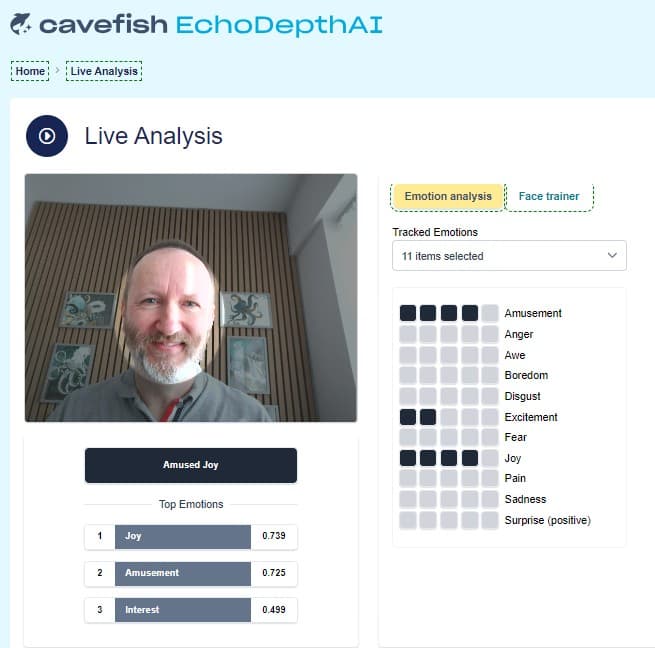
EchoDepth processes all six steps in real time — from raw video input to actionable decision signal — with latency under 100ms in live deployment contexts.
Sample EchoDepth Reports
Structured, decision-ready output — formatted for executives, analysts and operational teams.
Common questions
How does EchoDepth actually analyse communication signals?
EchoDepth maps 44 Action Units (AUs) from the FACS standard in video, tracking specific delivery patterns at 25+ frames per second. For audio, it analyses vocal pitch variation, speech pace, hesitation patterns and stress markers. For text, it applies linguistic tone and credibility mapping across sentence structure and word choice. All modalities combine into the composite Trust Score.
Does EchoDepth require specialist cameras or hardware?
No. EchoDepth works on any standard RGB camera — a laptop webcam, phone camera or standard video recording is sufficient. For audio analysis, standard microphone recording quality is sufficient. No wearables, biometric sensors or specialist equipment are required.
How long does an EchoDepth analysis take?
A sample analysis of existing content (video, audio, text or image) is delivered within 5 working days of submission. Pilot programme analyses are typically delivered within 2–3 working days. Real-time deployment provides per-frame outputs with sub-second latency during live sessions.